
Method
Fuel and tolls: how to split a shared car journey
Fuel and tolls are split equally between all occupants, driver included: the journey benefits them like everyone else, and they merely fronted the money. Vehicle wear is a separate item, which some groups value using the kilometric allowance published each year by the French tax authority.
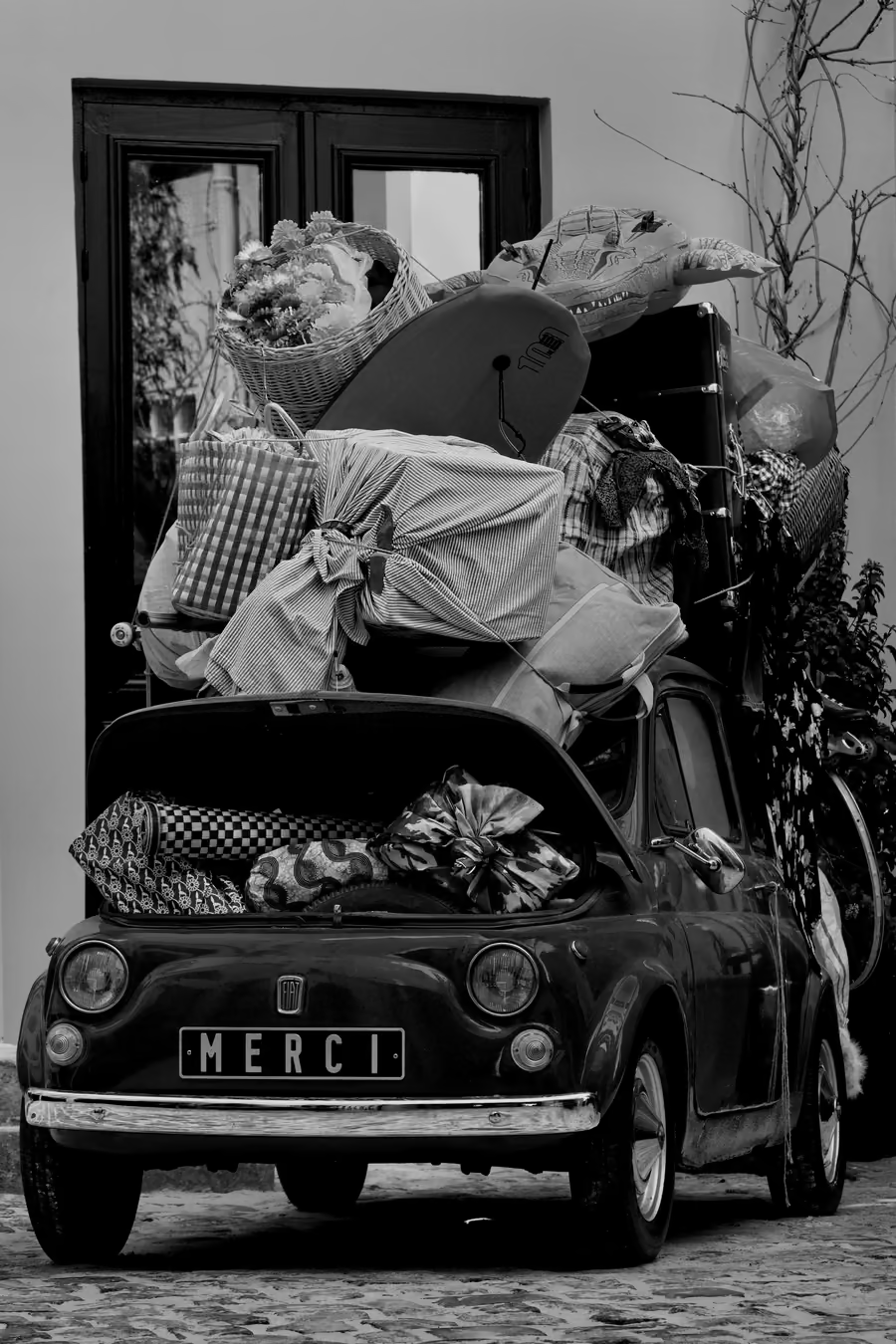
The driver pays a share like everyone else
It is the question that comes up at every departure, and the answer is simple: the journey benefits them as much as anyone, they merely produced the card at the pump. Fuel and tolls are therefore split equally between all occupants, driver included, and the group then pays back what they fronted. Leaving them out would amount to gifting them their own trip.
Vehicle wear is a separate item
Lending your car for eight hundred kilometres has a real cost, which is neither fuel nor tolls: tyres, servicing, depreciation. Some groups value it, others do not, and both hold up as long as it is said before leaving. The kilometric allowance published each year by the French tax authority gives a figure, which includes fuel, maintenance and depreciation: if you use it, do not charge fuel on top, it is already in there.
Two unevenly filled cars
Do not keep two separate accounts: that would charge more to the occupants of the emptier car, when the number of vehicles is a group decision. Add up the fuel and tolls of both, divide by the total number of travellers. It is the only split that does not penalise those who ended up three in a car while the others were five.
The tank at the start and at the end
Return the car with the fuel level it started at, and count that fill-up in the shared costs. Without this rule, whoever fills up last pays for the next person's kilometres, and whoever returns an empty tank charges their own to the owner. It is a detail that rarely costs more than thirty euros, and it still leaves a mark.
Key points
- Fuel and tolls on a shared journey are split equally between all occupants, driver included.
- The kilometric allowance published each year by the French tax authority includes fuel, maintenance and vehicle depreciation.
- Charging both the kilometric allowance and the fuel counts the fuel twice.
- When a group travels in several vehicles, adding the costs before dividing avoids penalising the occupants of the emptier car.
- Returning a borrowed vehicle at its original fuel level avoids shifting the cost of one journey's kilometres onto the next.
Frequently asked questions
Should the driver pay for fuel?
Yes, their share like everyone else. They front the cost, the group pays them back afterwards.
Should the car owner be paid something?
That is a group choice, to be stated before leaving. The kilometric allowance gives a reference, but it then replaces charging for fuel.
How do you count someone joining by train?
They do not share the car costs, and their ticket is their own. Travel becomes an individual expense for each person.